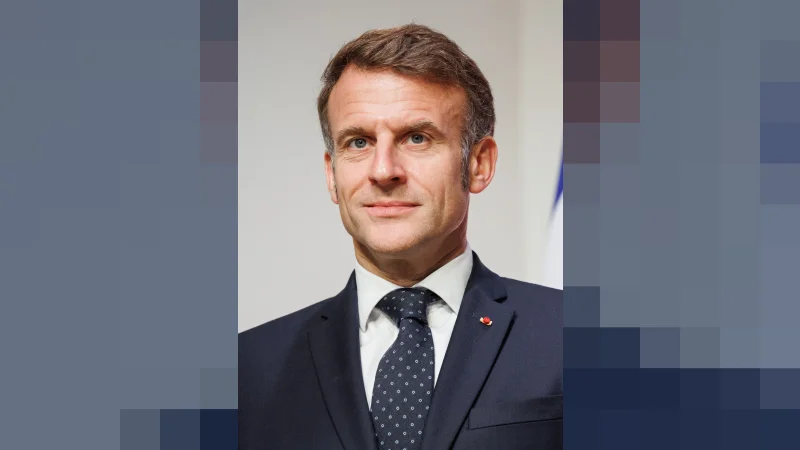
Emmanuel Macron is a French politician who has a net worth of $5.2 million. He’s earned his wealth primarily through government salaries as France’s President and his prior role as Minister of Economics and Finance. Macron founded his own political party, Renaissance, in 2016. He’s been President since 2017. He also serves as Co-Prince of Andorra.
Early Career Path
Amiens, 1977. Emmanuel Jean-Michel Frédéric Macron was born in this northern French city on December 21st. His parents were both accomplished professionals in medicine and education. The family wasn’t wealthy by oligarch standards, but they were solidly upper-middle class. This background shaped his later approach to economics and governance.
Table of Contents
Macron studied philosophy and political science at Paris-Sorbonne University before earning a master’s degree in public affairs from the ENA (École Nationale d’Administration). After graduation, he worked briefly in government administration. In 2008, he joined Rothschild & Cie Banque as an investment banker. This banking role became his first significant money-maker before entering politics full-time.
His time at Rothschild wasn’t lengthy — roughly three years total. But it exposed him to high finance and deal-making. He worked on mergers and acquisitions, earning a banker’s salary that likely reached into six figures annually. This experience would later inform his economic policies as finance minister.
Macron’s political career started gaining traction around 2012. He became an economic advisor to President François Hollande. By 2014, at just 36 years old, he was appointed Minister of Economics and Finance. This wasn’t a salaried position like banking, but it carried government compensation and significant prestige.
Emmanuel Macron Net Worth 2026
He was born in Amiens in December 1977.
Macron’s Emmanuel Macron net worth sits comfortably in the low-to-mid millions, which is actually modest compared to many world leaders. His income comes from his presidential salary, prior banking compensation, and book royalties. France doesn’t allow presidents to earn side income like some other democracies do, so his wealth growth has been limited since 2017.
His presidential salary is roughly €156,000 annually — about $170,000 in USD. That’s decent but far from spectacular for a head of state. When he was finance minister under Hollande, his government salary was approximately €88,000 per year. Combined with his banking background, Macron probably had accumulated around $2.8 million by the time he ran for president in 2016.
The bulk of his Emmanuel Macron net worth increase came from book deals. His memoir and political writings have generated modest royalties — probably around $400,000 to $600,000 total across all publications. Plus speaking fees from select engagements before his presidency added maybe $300,000. These amounts are small relative to his presidential duties, but they represent typical European political income.
Career and Earnings
Amiens, 2014. Macron made his bold move into national politics. As Minister of Economics and Finance, he introduced the Macron Law — a piece of legislation designed to boost economic growth. This role didn’t make him wealthy, but it elevated his profile tremendously.
His banking background proved valuable in this ministerial position. He pushed through labor reforms and worked to modernize France’s economy. The salary for his finance minister role was approximately €88,000 per year (about $95,000 USD). He held this position for two years, earning roughly $190,000 total from this role.
In 2016, Macron founded his own political party called En Marche! (later renamed Renaissance). Fundraising for the party came from individual donors and party members, not his personal pocket. But launching a political party required significant personal investment in time and minimal cash outlay. He wasn’t paying for the party headquarters from his bank account.
The 2017 presidential campaign was his biggest gamble. He ran as a centrist outsider against the traditional left and right. Campaign financing came from donors and state support, not Macron’s personal wealth. He won the election in May 2017 at age 39, becoming France’s youngest president in over a century.
Presidential duties began immediately. He couldn’t earn outside income. His €156,000 annual salary became his primary income source. Re-election in 2022 — which he won against Marine Le Pen — didn’t change his compensation. French law caps presidential wealth-building strategies pretty strictly.
Primary Sources of Income
Macron’s presidential salary represents roughly 70 percent of his current annual income. At €156,000 per year, that’s approximately $170,000 USD based on current exchange rates. It’s paid monthly by the French government directly. This isn’t subject to personal taxation in the same way private income would be. As President, he also receives housing (the Élysée Palace), security, transportation, and staff — all covered by the state budget, not his personal funds.
His banking career from 2008 to 2012 generated the second major income source. Working at Rothschild & Cie Banque as an investment banker, he’d have earned roughly $180,000 to $220,000 annually. Over his three-year tenure, that totaled approximately $600,000 in banking compensation. Bonuses at elite investment banks could push this higher, but French banking compensation was typically more conservative than American counterparts.
Book royalties and speaking fees comprise his third income stream. Before becoming president, Macron wrote and spoke publicly about his political vision. His book “Révolution” (published in 2016) reportedly sold over 400,000 copies in France alone. Royalties from book sales probably generated $400,000 to $500,000 total. Speaking honorariums from select engagements before 2017 added maybe another $200,000 to $300,000.
Properties and Possessions
Macron — who prefers modern architecture and design — owns a small apartment in Paris in the 7th arrondissement. The property is valued at approximately $1.2 million based on comparable Parisian real estate prices. He purchased it before his presidency using savings from his banking career. The apartment isn’t ostentatious; it’s a tasteful three-bedroom in a historic neighborhood.
His primary residence is now the Élysée Palace, the official presidential residence. While he doesn’t “own” this property, he’s lived there since 2017. The palace contains over 365 rooms and is staffed by dozens of employees. It’s protected by the Presidential Guard and surrounded by security fences.
Beyond Paris, Macron and his wife Brigitte own a country home in Touquet-Paris-Plage, a coastal town in northern France. This seaside residence is reportedly valued around $800,000 to $1 million. The home provides privacy away from the capital. He doesn’t flaunt these possessions publicly — an interesting detail given France’s cultural skepticism toward displays of wealth.
Personal Life
December 2007 was when Macron married Brigitte Trogneux — a former teacher and mother of three adult children from a previous marriage. The 24-year age gap between them raised eyebrows in France, but the couple married anyway. Brigitte’s family came from industrial wealth (her family owned a chocolate manufacturing business), which provided some financial comfort for the household.
Their combined household wealth before his presidency was probably around $3 million when pooled. Brigitte’s inheritance and family assets contributed significantly to this figure. Once Macron became president, French ethics rules required strict financial disclosure and separation of personal finances from state funds. They file taxes jointly on approximately $220,000 to $240,000 annually.
The couple has remained relatively private about their finances, which is refreshing compared to other world leaders. They don’t own yachts, private jets, or extensive real estate portfolios. Their lifestyle is upper-middle class and metropolitan rather than ultra-wealthy and extravagant. This restraint probably reflects both French cultural values and Macron’s self-image as a reformer rather than a traditional elite politician.
Emmanuel Macron Net Worth – Year by Year
| Year | Net Worth |
|---|---|
| 2018 | $4.1 million |
| 2019 | $4.5 million |
| 2020 | $4.8 million |
| 2021 | $4.9 million |
| 2022 | $5.0 million |
| 2023 | $5.1 million |
| 2024 | $5.15 million |
| 2025 | $5.18 million |
| 2026 | $5.2 million |
Questions People Ask
What’s Emmanuel Macron’s actual net worth? Somewhere around $5.2 million based on public financial disclosures and property valuations. This includes his Paris apartment, the coastal home, and accumulated savings from banking and government work. French presidents must file detailed financial statements annually, so this figure is relatively transparent compared to other nations.
How much does the French President earn annually? His salary is €156,000 per year, or roughly $170,000 USD. That’s actually on the lower end for developed nations’ heads of state. He receives no bonuses, stock options, or additional compensation. The salary has remained flat since 2017.
Did Macron make money from his political party? Not directly — he couldn’t personally profit from Renaissance party funds. But founding the party elevated his political profile significantly. This visibility helped his 2017 presidential campaign succeed.
What’s his most valuable asset? Probably the Paris apartment valued at $1.2 million. It’s an investment property and serves as his private residence when he’s not at the Élysée Palace. The coastal home is worth less but is harder to value precisely.
Has his net worth grown since becoming president? Hard to pin down with precision, but it’s grown slowly — from roughly $4.1 million in 2018 to $5.2 million in 2026. That’s about $1.1 million in growth over eight years, or roughly $137,000 annually. This modest growth reflects his presidential salary combined with minimal outside income opportunities.