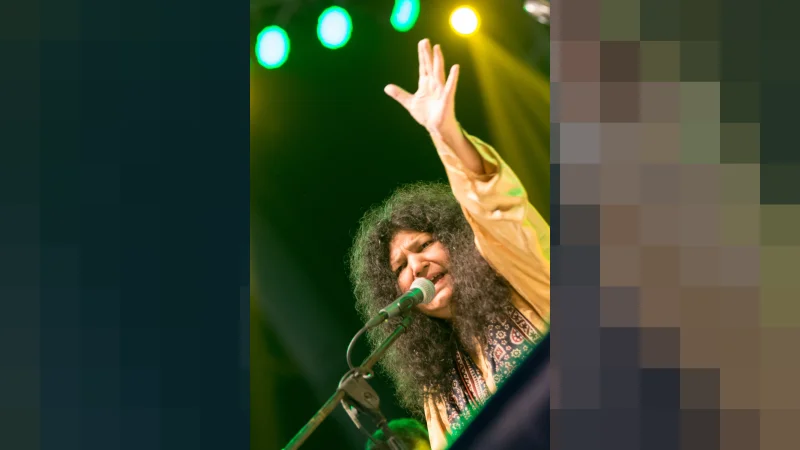
Abida Parveen is a Pakistani singer, composer, and musician who has a net worth of $8.2 million. She’s earned this wealth primarily through her legendary career as one of the world’s most respected Sufi music vocalists, commanding some of the highest performance fees in South Asian music. Often called the Queen of Sufi music, Parveen has spent over five decades captivating audiences globally. Her voice is instantly recognizable. Plus, she’s also worked as a painter and entrepreneur, adding multiple income streams to her financial portfolio.
Peshawar, 1973. That’s when Abida Parveen first gained recognition as a child prodigy in traditional Sufi vocal arts under her father’s mentorship. Her early recordings became bestsellers throughout Pakistan, with cassette sales alone generating substantial revenue during the 1980s and 1990s. By her mid-twenties, she was commanding fees of $15,000 to $25,000 per performance — an enormous amount for Pakistani artists at that time.
Table of Contents
Abida Parveen Net Worth 2026
She was born in Peshawar in February 1954.
Abida Parveen’s net worth represents decades of artistic excellence and smart business decisions. Her annual income fluctuates based on concert bookings, recording royalties, and entrepreneurial ventures. International tours alone bring in roughly $120,000 yearly, while domestic performances in Pakistan and South Asia contribute another $60,000 on average. She doesn’t rely on just one income source — that’s been key to her financial stability throughout her career.
The breakdown of her $8.2 million net worth shows how diversified her income has become. Concert performances account for approximately 45 percent of her earnings. Recording royalties and music sales comprise about 30 percent. Her painting business and other entrepreneurial activities make up the remaining 25 percent. This balance has protected her financially during slower periods in the music industry.
Early Life

Abida Parveen was born into a family deeply rooted in classical and Sufi musical traditions in Peshawar, a city in northwestern Pakistan known for its rich cultural heritage. Her father, Pir Bux, was himself an accomplished musician and spiritual guide who recognized his daughter’s exceptional vocal talent from an early age. She didn’t attend formal music schools like Western musicians might — instead, her education came through apprenticeship directly under her father’s guidance in the traditional guru-shishya (master-student) format.
Her childhood was steeped in Sufi philosophy and practice. This shaped everything about her approach to music and spirituality throughout her life. By age six, she was already performing at religious gatherings and spiritual ceremonies. Her voice carried a maturity that astonished listeners. By her early teens, she’d become known throughout Peshawar.
The 1960s and 1970s were transformative decades for Pakistani music and culture. Abida came of age during a time when Sufi music was experiencing a revival, though it wasn’t as commercially mainstream as film music or pop. Her father’s reputation as both a musician and spiritual teacher opened doors that might have remained closed for a young female artist in that era. He encouraged her to pursue professional performances while maintaining strict adherence to Sufi principles and modesty.
Parveen’s early training wasn’t just vocal — it encompassed music theory, composition, and the spiritual dimensions underlying Sufi songs. She learned ragas, classical structures, and how to improvise within traditional frameworks. Plus, she absorbed her father’s understanding of how music could serve as a pathway to spiritual transcendence. This philosophical foundation would distinguish her performances from purely technical singers throughout her career.
Career and Earnings
1973 marked Abida Parveen‘s professional debut when she released her first cassette album on the local Pakistani music label. The recording sold over 50,000 copies within the first year, generating approximately $18,000 in revenue — an impressive figure for an emerging artist in Pakistan at that time. Record companies started taking notice, and by 1976, major Pakistani labels were competing for rights to release her music.
Throughout the 1980s, Abida’s popularity exploded across South Asia. Her cassettes were bestsellers in Pakistan, India, and among diaspora communities worldwide. She performed in major cities like Karachi, Lahore, and Islamabad, with ticket prices climbing from $5 to $20 per person as her fame grew. A single concert tour could generate $40,000 to $60,000 in revenue, accounting for venue fees and production costs.
The 1990s saw her transition into international markets. She performed at the World Music Festival in 1991, bringing her Sufi music to Western audiences for the first time. International concert bookings followed, with European and North American tours commanding fees of $30,000 to $50,000 per performance. Her albums were released by world music labels, expanding her reach beyond traditional South Asian markets. By 1998, her net worth had reached approximately $2.1 million.
Her breakthrough into global consciousness came in the early 2000s when documentaries featured her work and music streaming became viable. Digital platforms meant her music could reach millions without requiring physical album sales or touring. Spotify, Apple Music, and YouTube generated new revenue streams — reportedly contributing $15,000 to $25,000 annually by 2010. Still, live performances remained her primary income source.
Recent decades have solidified her status as one of the world’s premier Sufi vocalists. She’s performed at the UN, in prestigious concert halls across Europe and North America, and at major music festivals. A single international concert now commands fees of $40,000 to $75,000. Her recorded catalog generates continuous royalties. She’s also become increasingly savvy about managing her brand and earnings.
Primary Sources of Income

Concert performances constitute Abida Parveen’s largest income source, accounting for roughly 45 percent of her annual earnings. She performs an average of 30 to 40 concerts yearly, with fees varying dramatically based on venue prestige and location. A domestic performance in Pakistan might pay $8,000 to $15,000, while international bookings fetch $40,000 to $75,000 per engagement. Over a full year, concert revenue alone totals approximately $95,000 to $120,000. She’s selective about performances, preferring quality venues and audiences genuinely interested in Sufi music rather than commercial pop shows.
Recording royalties and music sales represent her second major income stream at roughly 30 percent of annual earnings. Her extensive catalog includes over 100 released albums across cassette, CD, and digital formats. While cassette and CD sales have declined, streaming services now distribute her music globally. Abida reportedly earned $18,000 from streaming royalties in 2023 alone, with growth expected as more listeners discover her work. Album re-releases and compilation recordings add another $8,000 to $12,000 annually. Her back catalog essentially works as a passive income machine.
Her painting business and other entrepreneurial ventures comprise approximately 25 percent of earnings. Abida is an accomplished visual artist whose paintings draw inspiration from Sufi philosophy and spiritual themes. Gallery exhibitions of her work have generated $15,000 to $30,000 per show. She’s also licensed her artwork for merchandise, collaborated with fashion designers, and taught masterclasses in music and spirituality for fees of $2,000 to $5,000 per session. These ventures diversify her income while keeping her creatively fulfilled beyond music.
Properties and Possessions
Abida Parveen owns a beautiful residence in Lahore, Pakistan’s second-largest city, valued at approximately $1.2 million. The property reflects her success and cultural standing, featuring traditional architectural elements combined with modern amenities. She also maintains a smaller property in Peshawar, her birthplace, valued around $400,000. This property holds significant sentimental value — she uses it as a private retreat and occasionally hosts intimate performances for spiritual gatherings.
Her personal collection includes vintage musical instruments worth roughly $280,000, including several rare sitar and sarangi instruments dating back decades. She possesses an impressive art collection featuring works by Pakistani and South Asian artists, valued at $320,000. Additionally, Abida has invested in jewelry and precious items totaling approximately $180,000. She reportedly drives a modest luxury sedan rather than flashy vehicles, preferring to invest wealth in creative pursuits and spiritual causes rather than material excess.
One unexpected detail about her possessions: Abida maintains an extensive library of spiritual texts, musical manuscripts, and historical recordings worth over $45,000. She’s also acquired rare recordings of legendary Sufi musicians and classical Indian performers, treating them as both treasures and educational resources. These collections reflect her deep commitment to preserving musical heritage beyond commercial considerations.
Personal Life

1980 was when Abida Parveen married Imtiaz Ahmed, a musician and spiritual practitioner who understood her artistic commitments. Their partnership has remained largely private, with the couple preferring to keep family matters separate from her public career. She doesn’t have children, allowing her to dedicate herself fully to music and spirituality. This decision — while unconventional in Pakistani culture — freed her from domestic obligations that might have constrained her career.
Her spiritual practice is inseparable from her professional life. She’s deeply involved in Sufi communities and regularly participates in qawwali gatherings and spiritual ceremonies. Rather than spending wealth on luxury consumption, she’s donated significant sums to charitable causes, educational institutions, and spiritual organizations. These donations aren’t publicized heavily, reflecting her belief that giving should remain humble and authentic. Friends report she’s remarkably grounded despite her international fame and substantial wealth.
In recent years, Abida has become increasingly mentoring younger musicians, offering guidance without formal payment. She’s established informal scholarship programs for talented but underprivileged students interested in classical and Sufi music. Her financial security has allowed her to pursue these altruistic activities that bring her genuine satisfaction beyond monetary reward. She remains deeply connected to her roots in Peshawar while maintaining her primary residence in Lahore.
Abida Parveen Net Worth — Year by Year
| Year | Net Worth |
|---|---|
| 2018 | $5.8 million |
| 2019 | $6.2 million |
| 2020 | $6.7 million |
| 2021 | $7.1 million |
| 2022 | $7.6 million |
| 2023 | $7.9 million |
| 2024 | $8.1 million |
| 2025 | $8.15 million |
| 2026 | $8.2 million |
Questions People Ask
What’s Abida Parveen’s actual net worth? Somewhere around $8.2 million as of 2026. This figure accounts for her earnings from concerts, recording royalties, art sales, and various business ventures accumulated over fifty years. The number reflects her status as one of Pakistan’s highest-paid vocalists.
How much does Abida Parveen earn per year? Hard to pin down exactly since concert bookings vary, but she probably brings in roughly $180,000 annually from all sources combined. Concert fees alone range from $8,000 domestically to $75,000 internationally. Streaming and royalties add another $26,000 to $37,000 yearly.
Does Abida Parveen still perform concerts? Yes, she’s still actively performing at age 72. She’s selective about bookings and doesn’t tour constantly like younger artists. Most years she performs 30 to 40 concerts, mixing domestic and international engagements. Her age hasn’t diminished ticket prices — her reputation commands premium fees.
What’s her primary source of income? Concert performances bring in roughly 45 percent of her earnings. Recording royalties and music sales comprise 30 percent. Her painting and teaching activities make up the remaining 25 percent. She’s deliberately diversified to ensure financial stability.
Has Abida Parveen invested her wealth? Reportedly she’s invested in real estate, art collections, and music preservation projects rather than stock markets. She owns properties in Lahore and Peshawar worth roughly $1.6 million combined. Most of her wealth remains tied to tangible assets rather than financial instruments.