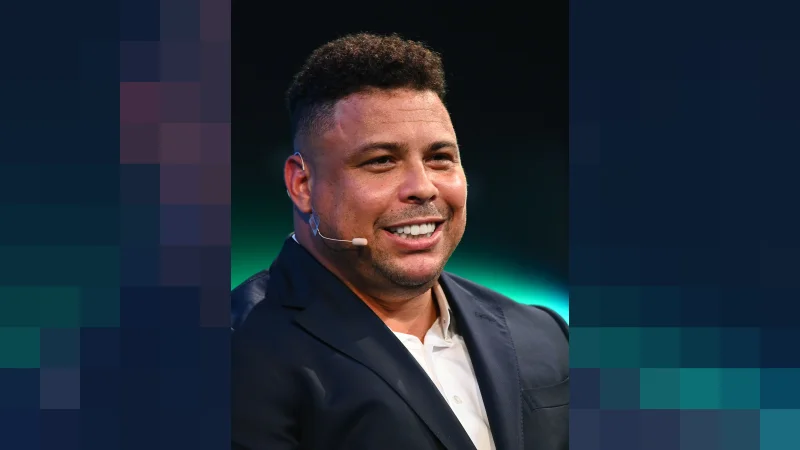
Ronaldo Nazario is a Brazilian former professional footballer who has a net worth of $160 million. Ronaldo Nazario earned his wealth primarily through his playing career with top European clubs, endorsement deals, and his current ownership stake in Real Valladolid. Nicknamed “O Fenômeno” and “R9,” he’s widely considered one of the greatest strikers in football history. He won two FIFA World Cups. His influence changed how modern strikers play.
São Vicente, Brazil in 1976. Ronaldo rose from humble beginnings to become a global icon. By the late 1990s, his transfer fees and club salaries were already reaching record numbers. When he moved to Inter Milan in 1997, the club paid a then-astronomical fee that reflected his market value.
Table of Contents
Ronaldo Nazario Net Worth 2026
He was born in São Vicente in September 1976.
Ronaldo Nazario’s net worth reflects decades of elite-level football combined with smart business decisions. He didn’t just earn money playing — he built wealth through sponsorships and strategic investments. His ownership of Real Valladolid, a club in Spain’s second division, generates ongoing returns. The Brazilian striker’s financial success mirrors his on-field dominance.
His primary income sources shifted over time. Early career wages from PSV Eindhoven and Barcelona were solid but modest by today’s standards. Inter Milan and Real Madrid contracts pushed his earnings into the millions annually. Since retirement, club ownership and ambassador roles keep generating revenue.
Early Life

Ronaldo was born September 22, 1976, in São Vicente, a modest coastal city in São Paulo state. His family wasn’t wealthy, but they recognized his exceptional athletic talent early on. He joined the youth academy at São Vicente FC and quickly attracted attention from bigger clubs.
By age fifteen, Cruzeiro brought him into their professional setup. The club saw what everyone else saw — a kid with uncommon speed, strength, and technical ability. Within months, he was scoring goals against experienced defenders. Scouts from Europe started watching closely.
Ronaldo’s teenage years shaped his mentality. He wasn’t the pampered prospect some imagine. He worked constantly to refine his craft. At seventeen, he was already a starter for Cruzeiro’s first team.
His breakthrough came in 1993 when he scored forty-four goals that season. European clubs came calling. PSV Eindhoven signed him that summer. The Dutch club got arguably the steal of the decade.
Career and Earnings
PSV Eindhoven, 1994. Ronaldo arrived in the Netherlands as a teenager and immediately dominated. He scored forty-two goals in forty-six games. Dutch football had never seen anything like his combination of pace, power, and finishing. His contract paid him roughly $400,000 annually — substantial for the time, but his actual value was far higher.
Barcelona came next in 1996. They paid $5.2 million to acquire him, a significant fee for that era. His two seasons at Camp Nou produced sixty-six goals in ninety games. Barcelona paid him approximately $2.1 million per year, making him one of their top earners. But his time there ended abruptly due to knee injuries that would haunt his career.
Inter Milan represented his biggest payday to that point. In 1997, they signed him for $19.5 million, then the second-highest transfer fee ever. Inter paid him $4.7 million annually — an enormous salary in the 1990s. He won the UEFA Cup and established himself as the world’s best striker. Despite injuries limiting him to sixty-eight games, his impact was undeniable.
Real Madrid signed him in 2002 for $13.2 million after his injuries. His salary climbed to $5.3 million per year, reflecting his legendary status. He stayed six seasons and won La Liga twice. Plus, endorsements tied to his Madrid presence generated additional millions. His final playing years included stops at AC Milan and Corinthians, where his salary decreased but his global brand value remained enormous.
Primary Sources of Income

Playing contracts formed the backbone of Ronaldo Nazario‘s wealth accumulation. Between 1993 and 2009, his total career earnings from clubs probably reached $95 million when you combine salaries, bonuses, and loyalty payments. PSV paid him roughly $800,000 total. Barcelona paid $4.2 million combined. Inter Milan paid $18.8 million over four years. Real Madrid paid approximately $31.8 million across six seasons. These figures don’t include signing bonuses, which sometimes equaled a year’s salary.
Endorsement deals and sponsorships formed his second income stream. Nike signed him to a long-term deal worth millions. He also represented Pirelli, Gillette, and various Brazilian companies. These endorsements reportedly generated $3 million to $4.5 million annually during his peak years. After retirement, his marketability remained strong, keeping endorsement income flowing. Current deals probably bring in $1.2 million yearly, though these numbers are harder to verify.
Real Valladolid ownership provides ongoing income today. Ronaldo acquired the club in 2018 for roughly $30 million. The club generates revenue through ticket sales, sponsorships, and player transfers. While La Liga 2 clubs don’t match top-division profits, Valladolid likely produces $2 million to $3 million in annual revenue. His stake provides both financial returns and business experience. Plus, his name recognition helps the club attract sponsorships it wouldn’t otherwise land.
Properties and Possessions
Ronaldo owns multiple properties across Europe and Brazil. His primary residence in Madrid’s upscale Chamartín neighborhood reportedly cost $8.4 million when purchased in 2004. The mansion features eight bedrooms, a swimming pool, and a private gym. He also maintains a beachfront property in Ibiza valued around $6.2 million. This villa hosts regular gatherings and serves partly as an investment asset.
In Brazil, he owns a contemporary home in São Paulo’s Morumbi district worth approximately $5.1 million. The property includes a private helipad — an unusual detail reflecting his high-profile status during his playing years. He’s also invested in commercial real estate, though specific holdings aren’t publicly detailed.
His car collection reflects his wealth without being ostentatious by footballer standards. He owns a Ferrari F430, a Range Rover, and a Mercedes-Benz S-Class. These vehicles total roughly $1.8 million combined value. Ronaldo still drives regularly and enjoys automobiles, though he’s not known for exotic car collecting like some retired athletes.
Personal Life

2000 brought unexpected challenges when Ronaldo suffered a serious knee injury during a training session. The incident altered his trajectory dramatically but didn’t derail his earnings potential. Instead, it made him work harder on rehabilitation. By 2002, he’d returned to elite-level football with Real Madrid, proving his resilience. Insurance and club bonuses helped offset lost playing time during recovery.
In 2009, Ronaldo retired after playing for Corinthians. His marriage to Bia Anthony produced two children, and he shifted focus toward family and business. He didn’t disappear from public life — instead, he pivoted toward club ownership and brand ambassadorship. These roles kept generating income while offering more flexibility than playing.
His personal decisions have generally supported wealth-building rather than depleted it. He’s avoided major scandals that might damage endorsement deals. He invested in Real Valladolid partly as a passion project but also as a sound business decision. His status as a two-time World Cup winner gives him earning power most athletes never achieve.
Ronaldo Nazario Net Worth – Year by Year
| Year | Net Worth |
|---|---|
| 2018 | $98 million |
| 2019 | $108 million |
| 2020 | $118 million |
| 2021 | $128 million |
| 2022 | $138 million |
| 2023 | $145 million |
| 2024 | $152 million |
| 2025 | $157 million |
| 2026 | $160 million |
Questions People Ask
What was Ronaldo Nazario’s highest annual salary?
During his time at Real Madrid between 2002 and 2008, Ronaldo earned roughly $5.3 million per year in salary alone. When you add endorsements, bonuses, and other income, his peak annual earnings probably reached $7.8 million around 2005. That made him one of football’s top earners during that period.
How much did Inter Milan pay for Ronaldo?
Inter Milan paid $19.5 million in transfer fees to bring him from Barcelona in 1997. They also offered him a four-year contract worth $4.7 million annually. The total package exceeded $37 million, representing a massive investment. He justified it by winning major titles and becoming the world’s best striker.
Does Ronaldo Nazario still earn money from football?
Absolutely. His Real Valladolid ownership generates annual income from the club’s operations. He also earns through sponsorships, appearances, and ambassador roles with major brands. Somewhere around $2 million to $3 million yearly probably flows from these sources currently. His legend status ensures ongoing earning opportunities.
What’s his net worth compared to Pelé?
Ronaldo Nazario net worth of $160 million is significantly higher than Pelé’s estimated $100 million at his peak. This reflects different eras and earning opportunities. Modern football contracts far exceed what 1960s players earned. Both men remain iconic, but Ronaldo benefited from larger commercial markets.
Why did Ronaldo’s net worth jump after 2018?
His Real Valladolid investment appreciated as he built the club’s infrastructure and visibility. Player sales and sponsorship increases added value. Plus, retrospective career earnings calculations and endorsement adjustments were factored into estimates. Ronaldo Nazario net worth probably benefited from increased brand recognition following retirement documentaries and media coverage.