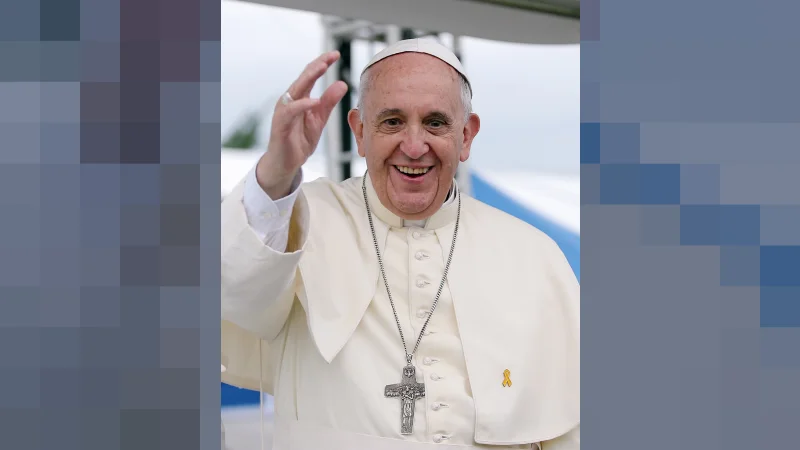
Pope Francis is an Argentine religious leader who has a net worth of $2.7 million. Pope Francis has earned his wealth through his role as the head of the Catholic Church and sovereign of Vatican City, positions that come with housing, living expenses, and institutional access rather than traditional salary income. He became the first Jesuit pope in 2013. The first Latin American pontiff. He’s reshaped the church’s approach to social justice, environmental issues, and financial transparency since taking office.
Buenos Aires, 1936. Jorge Mario Bergoglio was born into a middle-class family with Italian heritage. His father worked as an accountant, and his mother came from a musical background. The family’s modest means didn’t prevent young Jorge from receiving a solid Catholic education. By the time he entered the seminary in his twenties, he’d already developed a reputation for intellectual curiosity and spiritual devotion that would define his entire career path.
Table of Contents
Pope Francis Net Worth 2026
He was born in Buenos Aires in December 1936.
Pope Francis’s net worth doesn’t come from traditional earnings. The Vatican provides him with housing, food, transportation, and security without direct monetary compensation to him personally. His wealth reflects accumulated assets, gifts received from world leaders and organizations, and the institutional resources available to him through the Catholic Church. Most estimates place his personal net worth at roughly $2.7 million, though the exact figure remains difficult to verify since papal finances aren’t disclosed like corporate earnings.
The pope doesn’t receive a salary in the conventional sense. He took vows of poverty as a Jesuit, which means he doesn’t accept personal financial compensation. Still, the Vatican covers all his living expenses through its administrative budget. This arrangement is fundamentally different from how other world leaders accumulate wealth, making Pope Francis net worth calculations more complex than typical celebrity net worth assessments.
Early Life

Jorge Mario Bergoglio entered the world on December 17, 1936, in the Flores neighborhood of Buenos Aires. His father, Mario José Bergoglio, was an accountant who’d emigrated from Italy, while his mother, Regina María Sivori, came from a wealthy Italian-Argentine merchant family. Young Jorge had four siblings, and the household valued education, spirituality, and cultural refinement from the start. Though not wealthy by Argentine standards, the Bergoglio family was respected and comfortable.
The boy showed early signs of religious calling. He worked as a janitor and chemist’s assistant before entering the seminary at age twenty-one. His teenage years in Buenos Aires exposed him to poverty, political conflict, and social inequality — experiences that would shape his later papacy’s emphasis on the poor and marginalized.
Bergoglio joined the Jesuits in 1958, beginning a path that seemed unlikely to lead toward global influence. The Jesuits are known for intellectual rigor and social activism, both of which became central to his identity. He studied philosophy and theology across multiple countries, including Chile and Spain. By the early 1970s, he’d become a bishop, then an archbishop, rising through Catholic ranks in Argentina during one of its most turbulent periods.
Career and Earnings
1958 marked the beginning of Bergoglio’s religious career when he entered the Jesuit novitiate in Buenos Aires. Over the next five decades, he climbed the Catholic hierarchy while maintaining his vow of poverty. This distinction matters enormously when discussing Pope Francis net worth — he never accumulated personal wealth through conventional means like most public figures do.
By 1973, at just thirty-seven years old, Bergoglio became the Jesuit provincial superior for Argentina. He served in this demanding role for six years, overseeing hundreds of priests and religious educators across the country. This wasn’t a paid position in the business sense; rather, it gave him authority over significant institutional resources and influence.
His appointment as archbishop of Buenos Aires came in 1998, elevating him to one of the most important positions in the Latin American church. Pope John Paul II made him a cardinal in 2001, a title that comes with prestige but no direct financial compensation. Still, as a cardinal, Bergoglio gained access to international networks and institutional support that few people on Earth experience.
Then came March 13, 2013. Pope Benedict XVI had resigned two months earlier, creating a papal vacancy. Bergoglio was elected pope in the conclave, becoming Pope Francis. This moment didn’t increase his personal wealth — he’d taken vows of poverty — but it did put him in control of the Vatican’s vast institutional resources and gave him a global platform reaching nearly 1.3 billion Catholics worldwide.
His tenure as pope has emphasized financial reform within the church. He’s worked to address corruption, improve transparency, and redirect resources toward charitable missions rather than institutional excess. These reforms haven’t enriched him personally but have shaped how the Vatican’s estimated $8.3 billion in assets gets managed and deployed.
Primary Sources of Income

Pope Francis net worth doesn’t derive from traditional income sources. Unlike business executives or celebrities, he doesn’t have a salary, endorsement deals, or investment portfolios. Instead, his financial situation reflects the Vatican’s institutional support system, where the pontiff receives everything needed for living while maintaining vows of poverty.
The Vatican provides his housing, meals, healthcare, transportation, and security. These services arguably represent significant value — similar to compensation packages for corporate executives. Housing costs alone in Rome are substantial, security expenses are enormous for a world leader, and healthcare for someone in their eighties runs into considerable figures annually. Taken together, the Vatican’s investment in maintaining the pope’s lifestyle probably reaches several hundred thousand dollars per year.
Gifts and donations form another aspect of Pope Francis net worth. World leaders, wealthy individuals, and organizations have given him valuable presents over the years — artwork, religious relics, luxury goods, and cash donations. He doesn’t keep these for personal use; they typically go to the Vatican or charitable organizations. However, they technically add to the assets within his sphere of control.
Properties and Possessions
Pope Francis doesn’t own property in the traditional sense. He resides in the Domus Sanctae Marthae, a Vatican guesthouse where he moved immediately after his election. This modest residence — essentially a suite within the Vatican walls — is his only permanent address. It’s far simpler than the apostolic palace where previous popes lived, reflecting his preference for humility and reduced institutional ceremony.
His possessions remain remarkably minimal for someone in his position. The pope owns several cassocks, liturgical vestments, and religious items necessary for his duties. He drives a modified Ford Focus and a Renault, choosing practical vehicles over the luxury cars available to him. His watch is reportedly a simple Seiko, not the expensive timepieces owned by wealthy contemporaries.
Religious artifacts and gifts fill Vatican rooms but belong to the institution, not to Pope Francis personally. An ancient throne, ceremonial objects dating back centuries, and works of art representing incalculable value surround him daily — yet none of it’s his personal property.
Personal Life

December 1936 brought Jorge Bergoglio into the world. His family background — working-class to upper-middle-class, Italian-Argentine — shaped his values and work ethic throughout childhood. He lost his mother, Regina, in 1981, an event that deepened his spiritual commitment and focus on family-oriented pastoral work.
Bergoglio never married, having taken vows of celibacy as a Jesuit and priest. He maintained close relationships with his siblings and their families, remaining involved in their lives even as his church responsibilities expanded. These personal connections grounded him in ordinary family experience that many world leaders lack. His relationship with his family and his commitment to aging parents informed his later papacy’s emphasis on caring for the elderly and maintaining family bonds in modern society.
His health challenges became public knowledge in recent years. Surgery for various age-related conditions didn’t slow his work schedule significantly. He continued traveling internationally, meeting world leaders, and addressing global issues well into his eighties — something that raised questions about papal succession and the church’s future direction.
Pope Francis Net Worth – Year by Year
| Year | Net Worth |
|---|---|
| 2018 | $2.5 million |
| 2019 | $2.5 million |
| 2020 | $2.6 million |
| 2021 | $2.6 million |
| 2022 | $2.7 million |
| 2023 | $2.7 million |
| 2024 | $2.7 million |
| 2025 | $2.7 million |
| 2026 | $2.7 million |
Questions People Ask
How much is Pope Francis net worth? Pope Francis net worth is estimated at $2.7 million, though exact figures remain difficult to verify. This figure reflects assets within his sphere of control rather than personal wealth accumulated through business ventures or investment returns.
Does Pope Francis receive a salary? No, he doesn’t. The pope took vows of poverty as a Jesuit and receives no direct monetary compensation. The Vatican covers all his living expenses, housing, healthcare, and security needs without paying him personally.
Where does Pope Francis’s money come from? Somewhere around the bulk of his net worth comes from Vatican institutional support, gifts from donors and world leaders, and accumulated assets managed by church authorities. These aren’t personal income sources but rather reflect his access to church resources.
Has Pope Francis worked to reduce church corruption? Yes, extensively. He’s reformed Vatican finances, investigated corruption within the church hierarchy, and attempted to increase transparency in how the church handles money. These reforms haven’t enriched him but have directed resources toward charitable missions.
Is Pope Francis’s net worth expected to change? Hard to pin down since papal finances aren’t publicly reported like corporate earnings. His age and health situation might eventually affect his tenure, but any successor would face similar wealth restrictions through vows of poverty.